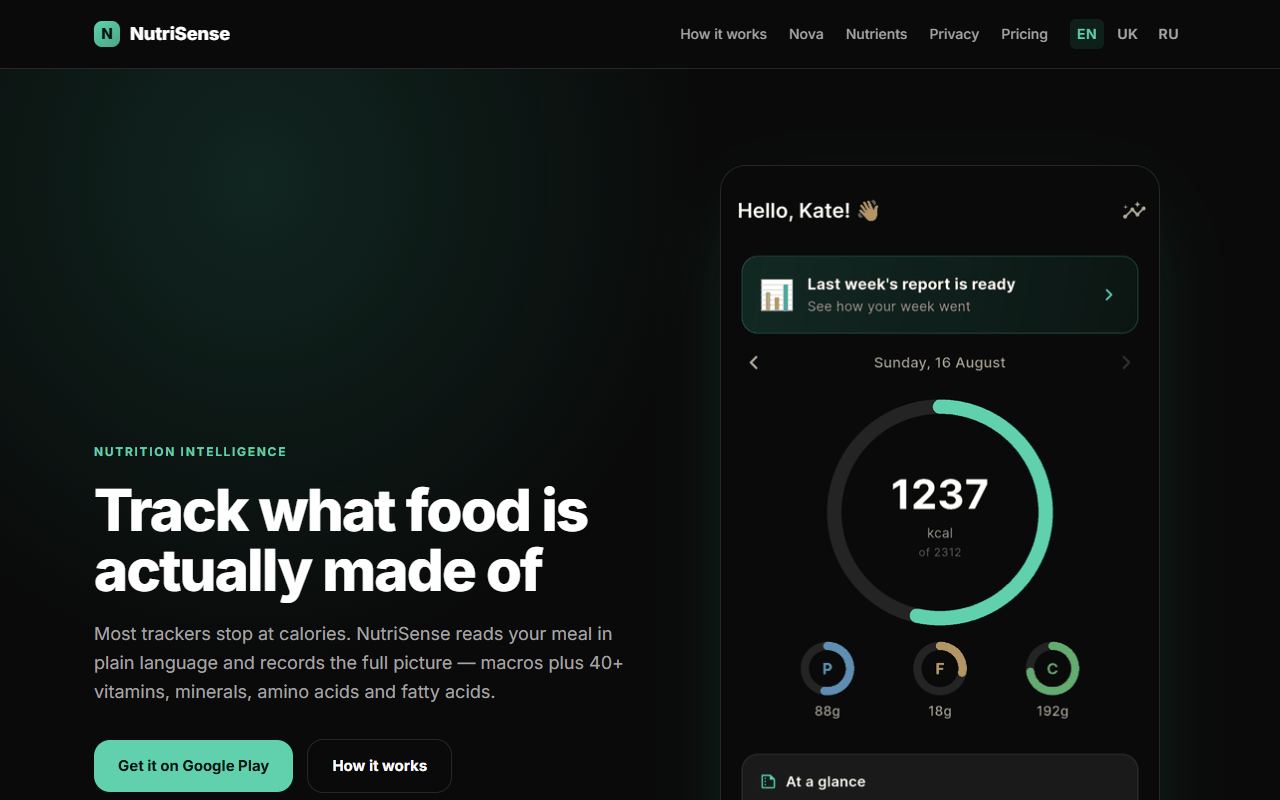
NutriSense
- Go
- Flutter
- LLM
A shipped mobile product: Go backend, Flutter client, and an assistant with hard limits on what it is allowed to claim.
Viktor MarymorychBackend & Systems Engineer
Rust, Go and Python backends. Real-time and event-driven architecture. AI agents and MCP integrations.
Products in production, systems delivered for partners, and the internal tooling my team runs on. Each one is here for the engineering problem it had to solve.
A shipped mobile product: Go backend, Flutter client, and an assistant with hard limits on what it is allowed to claim.
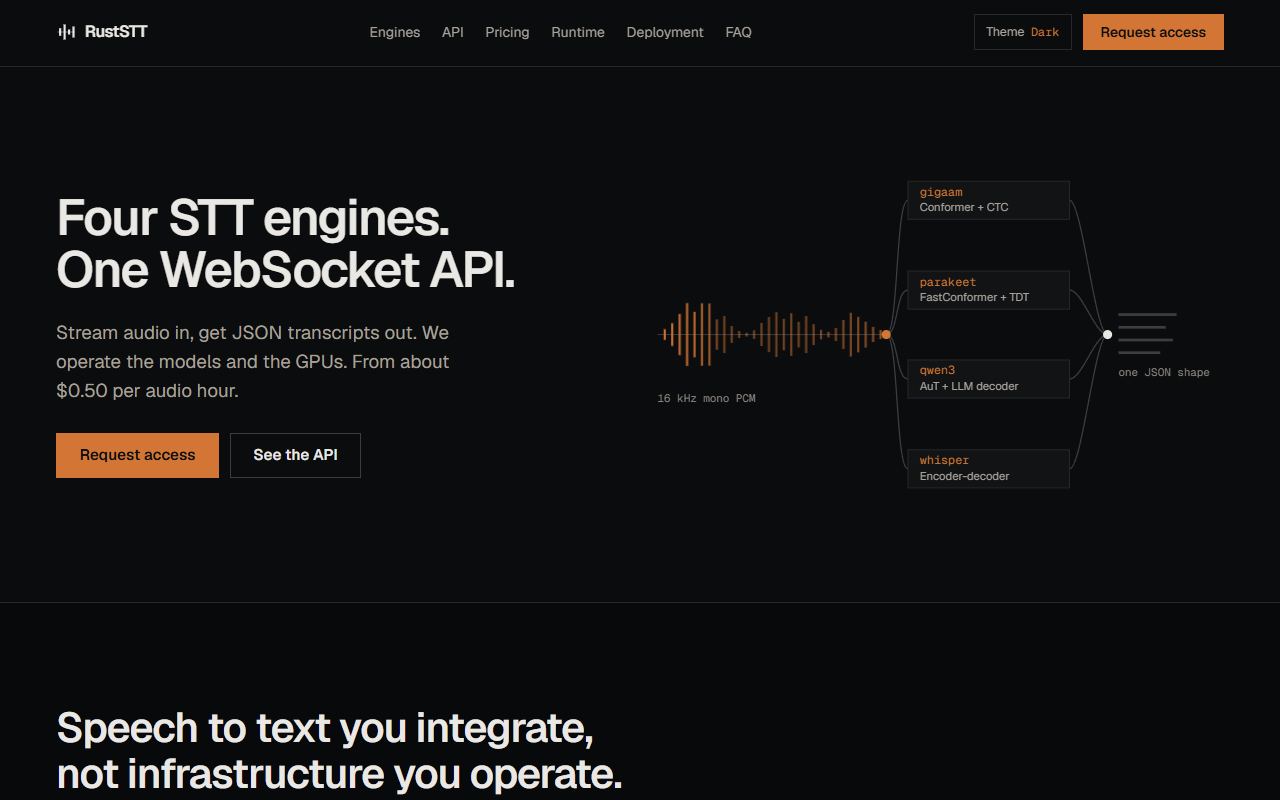
Real-time speech-to-text in Rust: streaming over WebSocket, several recognition architectures, one service that runs on CPU, CUDA or Metal.
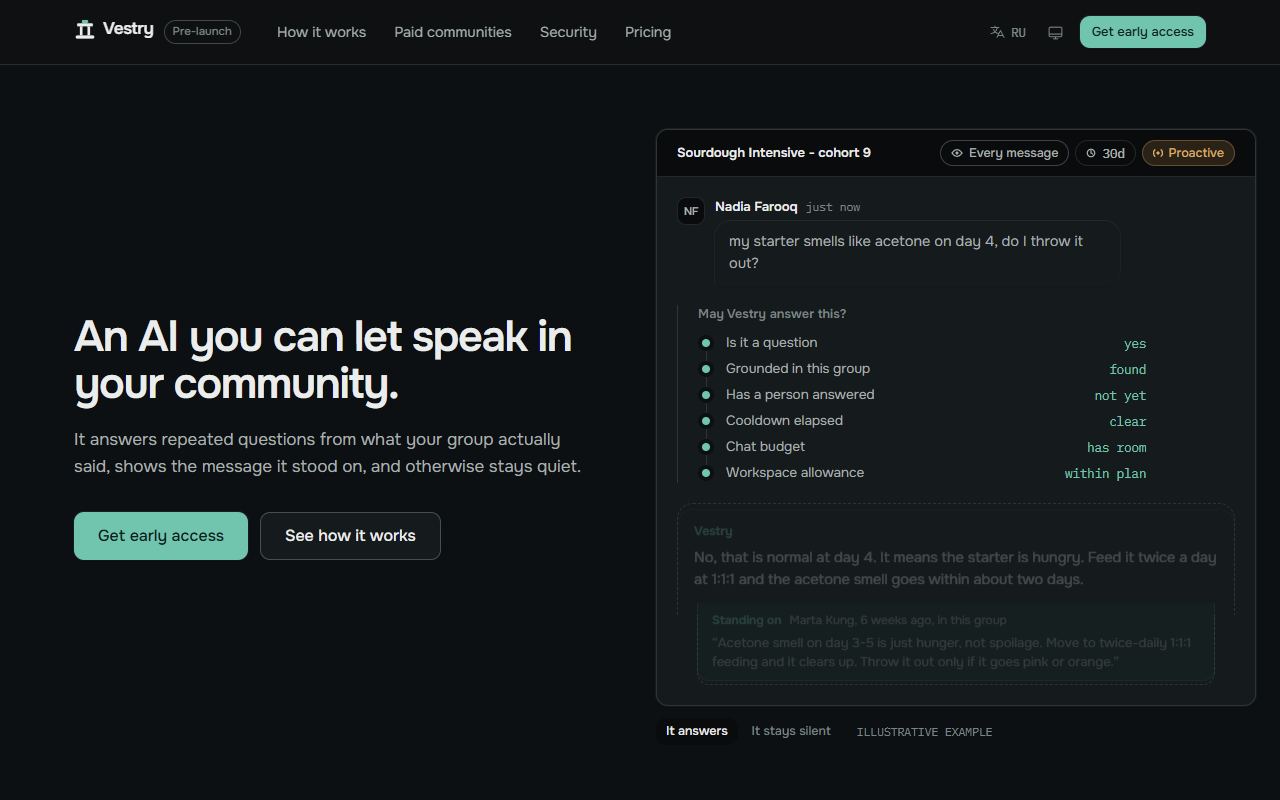
A distributed Telegram-facing system: four Rust backend services talking over gRPC, with agent-adjacent processing behind the protocol boundary.
Pre-release. Source is private.
Network reconnaissance and systems tooling, still ahead of release.
Internal engineering tool, not a generally available product. Source is private.
Engineering intelligence for a codebase: Git-aware context, durable project memory and architecture knowledge, exposed to AI tools over MCP.
Rust / MCP / Git / Developer tooling
Live product. Source is private.
A production Rust backend with an event-driven core: transactional outbox, background workers and a React front end, running on Cloud Run.
Rust / React / Cloud Run / Background workers
Deployed at installations. Source is private.
Edge telemetry for solar installations: an always-on local backend next to the inverter, not a cloud-only service.
Go / PostgreSQL / Docker / Edge
Not generally available software. Source is private.
Web Aegis and Blockchain Aegis: proprietary tooling the Red Sentra team uses for its own security-related delivery work.
Web Aegis / Blockchain Aegis
Four kinds of problem I take on, and what the work actually involves.
WebSocket transport, Redis event processing, transactional outbox, background workers. Retries, idempotency and back-pressure designed in from the start, so partial failure stays partial.
MCP servers and tool integrations, guarded agent behaviour, context and memory design. A model is a component with a failure rate, so there is always a deterministic path when it is wrong or unavailable.
Rust and Go services talking over gRPC and Protocol Buffers. Service boundaries, tenant isolation, schema and migration strategy, and the operational story for running it after launch.
Streaming speech-to-text in Rust across CPU, CUDA and Metal. Always-on local backends that sit next to the hardware they talk to and keep working when the network does not.
Two current roles. Both hands-on.
December 2025 to present Remote
Founder & Systems Engineer
Red Sentra is a remote engineering team of eight, including me. We build and operate our own products, deliver commissioned systems for external partners, support what we ship once it is live, and maintain internal engineering and security tooling. I stay technical: architecture, Rust and Go services, and the parts of delivery nobody else wants.
December 2025 to present Remote
Backend Engineer
Product engineering around an AI assistant that joins meetings and takes the administrative follow-up off people's hands. I work on the real-time path and the integrations that make the output usable inside a company's existing tools.
Contract backend engineering and offensive-security work, most of it under NDA. Bachelor's degree in Cybersecurity and System Engineering, Odesa Polytechnic, 2025.
Five positions I hold. All of them show up in the code.
Timeouts, retries, idempotency and back-pressure belong in the first design, not in a later patch. A service that only works on the happy path is not finished.
My offensive-security background shows up in where trust boundaries sit, how tenants are isolated, how services authenticate to each other, and how secrets, encryption and audit trails are handled. It is a property of the design, not a phase at the end.
If I cannot reconstruct what a system did from its logs, metrics and events, I do not consider it operable. Debugging in production is a design requirement.
Agents get explicit tool boundaries, validated inputs and outputs, and a fallback that does not need the model to be right. Non-determinism is acceptable in the answer, not in the plumbing.
Most of what I have built is still running and still mine to fix. Owning the on-call side changes the decisions you make on day one.
Backend and distributed systems, AI agent integrations, or a production system that is not behaving. Write directly and describe the problem.